Budgeting for Beginners: Simple Steps That Actually Stick

Budgeting for Dummies: A Practical, No-Nonsense Path to Control Your Money
A workable budget doesn’t have to be complicated—it has to be consistent. Real life includes irregular expenses, surprise bills, debt paydown, and savings goals that can feel far away. The goal is a simple system you can set up once, run with quick weekly check-ins, and adjust without starting over every time something changes.
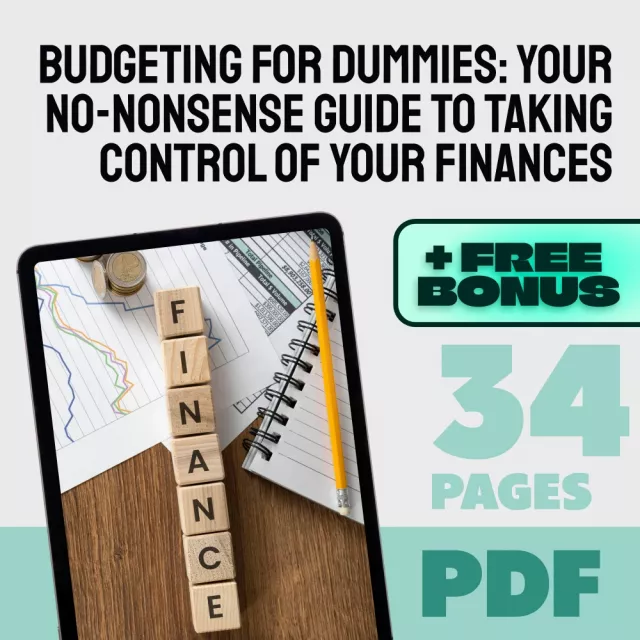
If you want a step-by-step digital resource you can keep open on your phone or laptop, Budgeting for Dummies: Your No-Nonsense Guide to Taking Control of Your Finances (Digital Download) is built to help you go from “I’ll figure it out later” to a plan you can repeat month after month.
What this digital budget guide helps you do
- Turn income and bills into a clear monthly plan, even if spending has felt unpredictable.
- Identify where money is actually going by grouping expenses into simple categories.
- Set realistic targets for needs, wants, debt payments, and savings without perfectionism.
- Build a buffer for irregular costs (car repairs, gifts, medical, annual subscriptions).
- Create a repeatable routine: plan → track lightly → adjust → review.
Budgeting gets easier when it stops being a daily “gotta be perfect” task and becomes a short routine you can stick to. For trustworthy, practical budgeting basics, you can also reference the Consumer Financial Protection Bureau (CFPB) budgeting resources and the Federal Trade Commission (FTC) guide to managing your money.
Quick-start: set up a budget in 30–60 minutes
You don’t need special software or hours of spreadsheet work. You need a starting point that’s close enough to reality that you’ll actually use it.
- List take-home income sources: paychecks, side income, benefits. If income varies, use conservative averages (or budget off last month’s income).
- Write down fixed monthly bills: rent/mortgage, utility baseline, insurance, minimum debt payments, subscriptions.
- Capture variable essentials: groceries, fuel/transportation, medications, childcare. Estimate from the last 1–2 months of statements.
- Add sinking funds for irregular expenses: annual fees, maintenance, holidays, school costs. Divide yearly totals by 12 so “surprises” stop being surprises.
- Pick 1–2 goals: emergency fund, credit card payoff, saving for a move. Assign a starter amount you can keep paying even in a tight month.
- Choose a tracking style: for many people, a weekly check-in is enough. Daily tracking is optional, not required.
- Schedule one monthly reset: adjust category amounts based on what actually happened, not what “should” have happened.
Tip: if you’ve never budgeted before (or it’s been a while), aim first for fewer late fees, fewer overdrafts, and a little breathing room. Optimization comes later.
Choose a budgeting method that matches your life
Pick one method and run it for a full month before switching. Constant method-hopping makes it hard to know whether the plan failed—or you just didn’t give it time to settle.
- If cash flow is tight, prioritize a method that prevents overdrafts and late fees.
- If income is irregular, use a “baseline budget” (bare essentials) plus a plan for extra income.
Budgeting methods at a glance
| Method | How it works | Best for | Watch out for |
|---|---|---|---|
| 50/30/20 | Allocate income by broad percentages | Beginners who want simplicity | Percentages may not fit high rent or high debt |
| Zero-based | Every dollar gets a job (bills, goals, spending) | Tight budgets or debt payoff focus | Needs regular check-ins to avoid category overspending |
| Envelope/cash-style categories | Set spending caps per category | Impulse spending or unclear variable expenses | Less convenient for online spending unless using digital envelopes |
| Pay-yourself-first | Automate savings/debt first, live on the rest | Stable income and goal-driven saving | Can hide overspending if bills aren’t fully accounted for |
| Sinking funds | Pre-save monthly for irregular costs | Anyone surprised by “once-a-year” expenses | Requires estimating and revising amounts over time |
Build categories that actually work
Categories should reduce stress, not create a second job. Start broad so you don’t lose momentum.
- Keep categories simple: housing, food, transport, utilities, debt, savings, personal, entertainment.
- Separate must-pay vs nice-to-have: when you need cuts, you’ll see them instantly.
- Use a small “miscellaneous” category: this keeps one-off purchases from blowing up your whole plan.
- Create a dedicated line for annual/quarterly bills: subscriptions, memberships, property taxes, routine maintenance.
- Set caps where you drift: if overspending is common, cap your top 2 problem categories (often food and shopping).
Debt and savings: set priorities without burning out
Common budgeting problems—and simple fixes
Download, access, and fit: what to expect from the eBook
If you want a clear, straightforward walkthrough, start with Budgeting for Dummies: Your No-Nonsense Guide to Taking Control of Your Finances (Digital Download). And once your essentials are covered, a planned “personal spending” line can help you enjoy purchases guilt-free—whether that’s something practical like a Calvin Klein Men’s Blue Geometric Button-Up Shirt or a home upgrade like the LED Lighted Anti-Fog Vanity Mirror.
FAQ
How long does it take to see results from a new budget?
Many people notice quick wins in the first month—fewer late fees or overdrafts and clearer spending decisions. Bigger changes like meaningful debt reduction and steady savings momentum usually show up after 2–3 months of consistent weekly check-ins and small adjustments.
What if income is irregular or based on tips/commissions?
Build your plan around a conservative baseline (or last month’s income) and fund essentials first. Then create a simple rule for “extra income,” such as catching up bills, adding to a buffer, and finally putting money toward your main goal.
Do budgeting methods like 50/30/20 work if rent is high?
Percentages are a starting point, not a rule. When housing takes a large share, focus on cash flow and realistic needs-based categories, and use sinking funds so irregular expenses don’t derail your month.















Leave a comment