Small Kitchen Layout Blueprint: Zones, Storage, Lighting
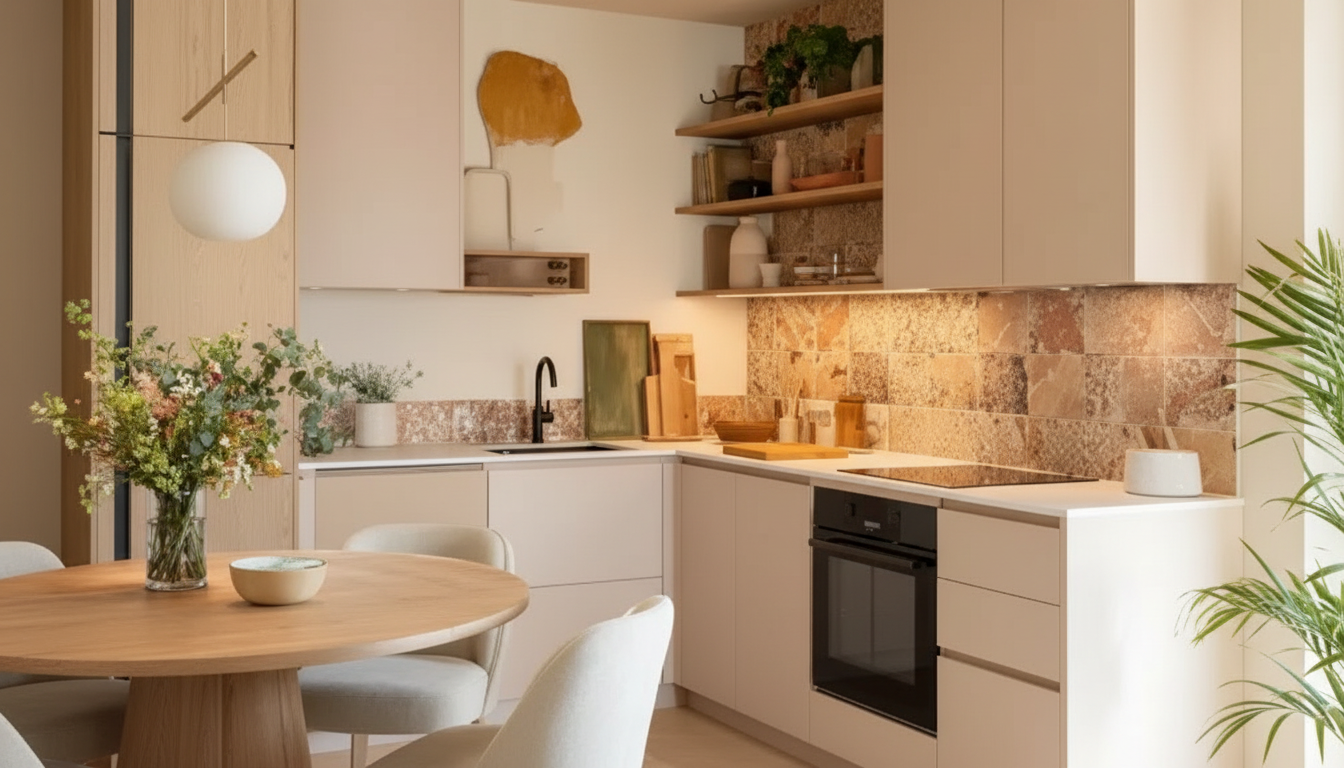
A small kitchen can feel effortless when the layout matches the room’s measurements, traffic flow, and daily routines. The goal isn’t to squeeze in more stuff—it’s to create clear work zones, protect your main prep surface, and use storage that’s easy to reach. Below is a practical blueprint for planning a small kitchen that works hard without turning into an obstacle course.
Start With Measurements and Constraints
Before you compare layouts, capture the real-world limits of the room. Accurate measurements prevent “paper-perfect” plans that fail once doors, drawers, and people start moving.
- Record wall-to-wall dimensions, ceiling height, and window/door locations (include door swing and clearance).
- Mark fixed elements: plumbing stack, gas line, venting route, electrical panel, radiator, and load-bearing walls.
- Note pinch points: narrow entries, corners that block drawers, and the path from kitchen to dining or living areas.
- Identify “no-go” zones for cabinets (window trim, outlets, baseboard heaters) and “must-have” zones (trash, landing space by the sink and cooktop).
- Set priorities: more prep space, better storage, seating, dishwasher, or full-size range—trade-offs are easier when the goal is clear.
If you’re remodeling, confirm layout rules and clearances using established guidance like the National Kitchen & Bath Association (NKBA) kitchen planning guidelines, and reference accessibility clearances when needed via the ADA Standards for Accessible Design.
Pick a Layout That Fits the Room (Not the Other Way Around)
Small kitchens succeed when the plan respects the room’s shape and circulation. Use the options below to narrow the field, then test your top two with a to-scale sketch.
Small-kitchen layout options at a glance
| Layout | Best for | Watch-outs | Space-saving upgrades |
|---|---|---|---|
| One-wall | Studios, open living areas | Limited counter run; landing zones can vanish | Tall pantry cabinet, under-cabinet lighting, pull-out trash near sink |
| Galley | Narrow rooms with two parallel runs | Tight aisles; appliance doors can collide | Slim pantry pull-outs, wall-mounted rail storage, shallow uppers on one side |
| L-shape | Corner-friendly rooms | Dead corner storage; traffic cutting through | Corner swing-out trays, drawer bases for pots, compact dishwasher |
| U-shape | Maximum storage/counter in small footprint | Corner conflicts; cramped aisle | Shorten one leg, open shelving on one side, integrated microwave shelf |
| Peninsula | Need extra prep or seating without an island | Blocks circulation if oversized | Waterfall-edge shelf for stools, end-panel storage, outlets for small appliances |
- One-wall kitchens: Best for studios and open plans; maximize vertical storage and keep prep near the sink.
- Galley kitchens: Strongest for efficiency; protect the walkway by using compact appliance depths and smart landing zones.
- L-shaped kitchens: Ideal when one corner can host the sink or prep; reduces through-traffic across the work zone.
- U-shaped kitchens: Highest storage potential in small footprints; watch corner access and keep the aisle comfortable.
- Peninsula layouts: Adds seating or prep without the bulk of an island; works well when a wall can’t be extended.
Create a Simple Zone Plan (Prep, Cook, Clean, Store)
In a tight kitchen, zones reduce backtracking and keep clutter from spreading. Think in “one-step reach” rather than “where can this fit?”
- Prep zone: Keep knives, boards, mixing bowls, and a small trash/compost pull-out within one step of the main counter.
- Cook zone: Store pans, utensils, oils, and spices in drawers beside the range; add a narrow landing strip if counter space is limited.
- Clean zone: Place the dishwasher near the sink when possible; keep towels, soap, and daily dishes in the closest cabinets.
- Store zone: Put everyday pantry items at eye level; reserve top shelves for backups and seasonal appliances.
- Traffic rule: Protect the prep zone from household foot traffic by shifting seating, pet bowls, and charging stations out of the main work line.
Smart Storage Ideas That Add Capacity Without Adding Cabinets
For a step-by-step storage map (what goes where, by zone), use the Small Kitchen Layout eBook | Kitchen Layout for Small Spaces Guide, Smart Storage Ideas, Compact Kitchen Design Planner, Space-Saving Layout Blueprint.
Compact Appliance and Fixture Choices That Protect Counter Space
Lighting and Finishes That Make a Small Kitchen Feel Larger
To compare efficient lighting types and where task lighting pays off most, the U.S. Department of Energy lighting guide is a helpful reference. If you’re also upgrading lighting in adjacent small spaces (like a powder room that shares the same “tight footprint” challenge), a bright, integrated option such as the LED Lighted Anti-Fog Vanity Mirror can support a cleaner, more spacious feel.
Turn the Plan Into a Repeatable Checklist
For an organized, print-friendly approach that ties measurements, zones, and storage into one plan, keep the Small Kitchen Layout eBook | Kitchen Layout for Small Spaces Guide, Smart Storage Ideas, Compact Kitchen Design Planner, Space-Saving Layout Blueprint within reach while you sketch and revise.
FAQ
What is the best layout for a very small kitchen?
It depends on the room shape: one-wall layouts are great for studios and open plans, galley kitchens are efficient in narrow rooms, and L-shapes work well when a corner can anchor prep or the sink. Measure first, then protect the main prep zone from household traffic so work doesn’t get interrupted.
How can more storage be added without remodeling?
Swap lower cabinets for deep drawers, add vertical dividers for trays and cutting boards, and use wall rails or magnetic strips to get tools off the counter. Toe-kick drawers, pull-out trash near the sink, shelf risers, and using the space above cabinets can also add capacity fast.
How wide should a galley kitchen walkway be?
Allow enough clearance for two people to pass comfortably and for appliance doors (especially the dishwasher and oven) to open without collisions. Check local codes and NKBA guidance, then test the aisle with painter’s tape on the floor to confirm it works in real life.














Leave a comment